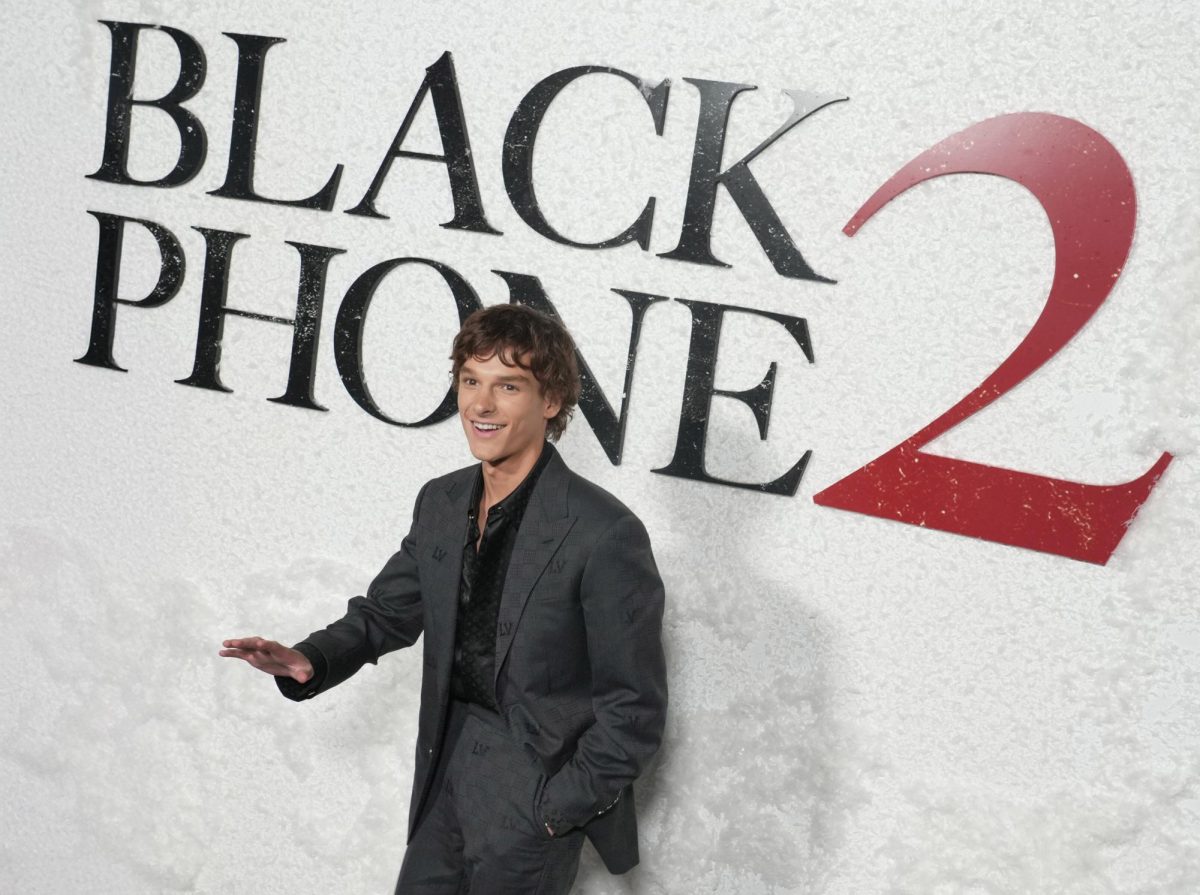
The second installment of Blumhouse Studios’ “The Black Phone” franchise hit theaters on Oct. 17, making it the perfect spooky movie for the fall season. The film stars Mason Thames, Madeleine McGraw and Ethan Hawke, all of whom reprise their roles. Miguel Mora, who appeared in the first film, returns in a new role for the sequel. Newcomers Arianna Rivas and Demián Bichir also join the cast.
Mason Thames plays Finney, the lead in both installments of “The Black Phone” series. When the first film was released, it was Thames’ first full-length feature, and one notable difference between the two films is the improvement in his acting skills. That is not to say he didn’t deliver a strong performance in the first movie, but it’s clear he has since been able to explore the layers of his character and the world around him. His character takes a major shift in personality between the two films, as the events of the first installment linger and shape Finney into someone more closed off, cold and distant. He uses marijuana to numb his trauma and often gets into fights at school.
A standout in this film is Madeleine McGraw, as we get to explore her character, Gwen, Finney’s younger sister, and learn more about her supernatural abilities. In the first film, we learn that Gwen has psychic powers that allow her to perceive past events that connect to the present and future through her dreams. In the sequel, we discover the source of these abilities and how they actually work. Her dream state now allows her to communicate with her mother’s spirit, and she becomes the key to locating the bodies of the young boys killed at the camp by the Grabber — the central plot of the second film. Gwen plays a leading role in this installment, and it becomes one of the film’s greatest strengths as she finally sees how her powers tie into the larger story and her family’s history.
As it turns out, death is not the end, as we see the Grabber return — not physically, but as a presence haunting Finney and Gwen from the depths of hell. He enters Gwen’s dream state and inflicts both psychic and physical harm, making her the perfect target to manipulate Finney’s emotions. Ethan Hawke continues to deliver a menacing, chilling performance, using his raspy voice to complement the Grabber’s demonic mask. While the idea of the Grabber returning is admittedly far-fetched, director Scott Derrickson leans into it and somehow makes it work. He weaves religious themes into the camp setting and pairs them with eerie cinematography that feels straight out of “The Blair Witch Project.”
A moment in the film that truly caught me by surprise is a stellar monologue from Thames, in which his character finally unleashes the bottled-up trauma from the first film and releases the pain the Grabber left him with. The monologue stands out because throughout the film we see Finney refusing to let anyone into his circle of trust — not even his sister or father — and hiding how deeply he is struggling. When he finally reaches his breaking point, he is surrounded by them, and the scene captures how someone who has endured such intense experiences can continue to carry traumatic memories. This moment solidifies that Thames has what it takes to portray characters with real complexity. Both Thames and McGraw deliver strong performances as two traumatized siblings willing to face their pain together.
The Black Phone 2 is lacking in some areas compared with its predecessor, yet I personally enjoyed the second film more. It takes a different approach, but it offers a fresh idea that works well for a sequel. The film has imagery reminiscent of Insidious or A Nightmare on Elm Street, and it was captivating when it needed to be, keeping me in suspense about what would happen next.
While there is no news about a third installment, Blumhouse Studios loves a successful horror-thriller franchise, so it wouldn’t be surprising if this isn’t the end for Mason Thames and Ethan Hawke in The Black Phone series.