This is part three of a series on homelessness in the Coachella Valley. If you would like to read the other parts, the links will be provided below.
The Coachella Valley has a particularly unique climate, owing in large part to its presence in the rain shadow of the mountain ranges on either side of the valley. The area was also once home to a large inland body of water known as Lake Cahuilla, not to be confused with the manmade reservoir of the same name.
The mountains that prevent rain from falling in the valley also act as a corridor directing wind through the San Gorgonio Pass, which is why we have an iconic wind farm there. While all of these features define the Coachella Valley and make it a beautiful place to live with generous mountain vistas visible from any part of the valley, they also directly contribute to a significantly hazardous environment.
The Coachella Valley experiences historically high summer temperatures, making proper hydration especially important, as most people lose a considerable amount of water through sweat alone. For people experiencing homelessness, fresh, clean water can be difficult to find and transport; they often rely on public sources such as libraries and parks for most of their drinking water.
Most studies agree that the average adult needs to consume at least a gallon of water a day, but according to the EPA, the average Californian uses more than 80 times that amount, using the restroom, washing, and doing laundry, all of which are also necessary whether you have a roof over your head or not.
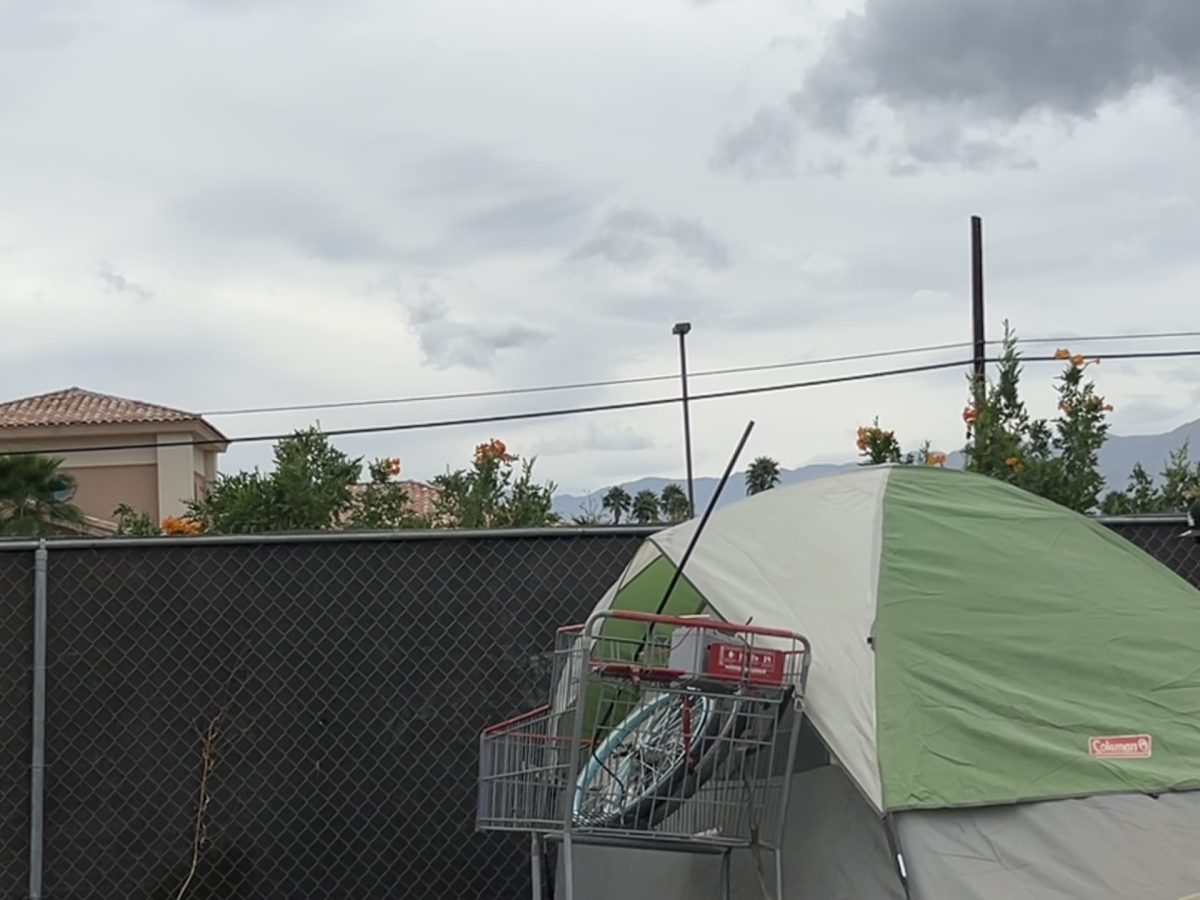
The valley can also have dangerously cold nights, dropping nearly thirty degrees at night during the winter months before accounting for wind chill. This drastic shift can be difficult to plan for with limited supplies, and many homeless folks have difficulty keeping warm. “It’s cold at night, [you need] someplace warm to go, so you try and make something,” one homeless man said, gesturing at his camp destroyed by the police after an unseasonably cold night.
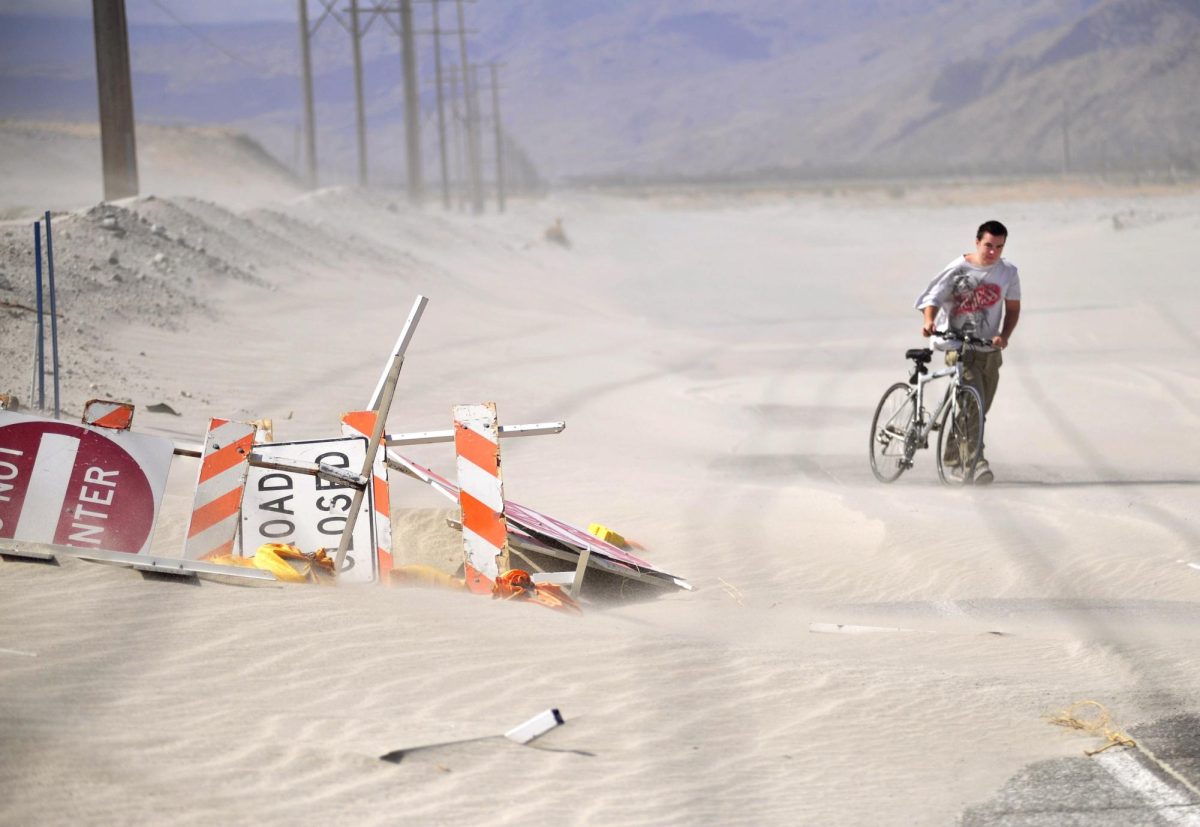
Owing to the valley’s high average winds and the leftover silt from ancient Lake Cahuilla, large dust storms are a significant health hazard. Dust inhalation can lead to long-term respiratory issues and even heart attacks after exposure, which is generally avoided by taking shelter indoors, as most tents will only provide some protection from the airborne dust and will suffer significant damage from the wind.
The destructive effect of wind was demonstrated in plain sight recently, as the Stagecoach Festival canceled events and evacuated the grounds due to high winds, and an incident where a stage light fell onto a concertgoer during the previous week’s Coachella festival was attributed to wind.
As evidenced by the historical Lake Cahuilla, the valley has relatively low drainage, further exacerbated by sprawling suburban developments. When the valley does receive moderate amounts of rain, widespread flooding can often be observed.
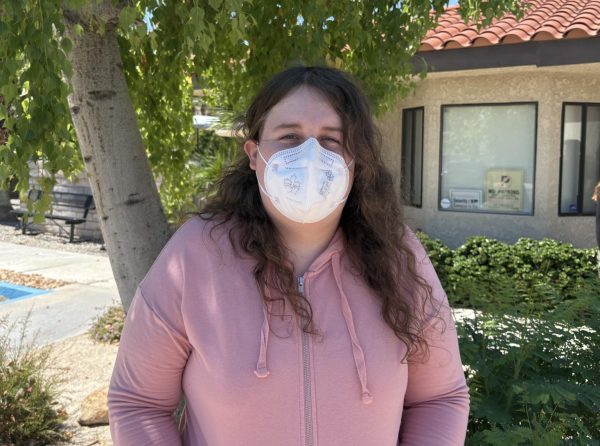
The airborne dust following the widespread flooding can also carry “Valley Fever,” a fungal infection which can often be confused with a more moderate flu or CoViD19. This dangerous pathogen poses an even greater risk to homeless populations due to a general inability to keep fully hydrated and receive proper medical care. As one person interviewed put it, “I’ve been sick … Everybody’s had it, everybody’s getting it.” One individual interviewed shared in reference to a chest flu that had been passing through the neighborhood.
In the final part of this series on homelessness, the general attitude towards homeless people will be examined and interrogated, questioning whether our current practices “solve” this problem or are actively making the problem worse.