This is part four of a series on homelessness in the Coachella Valley; the previous three parts can be found linked below.
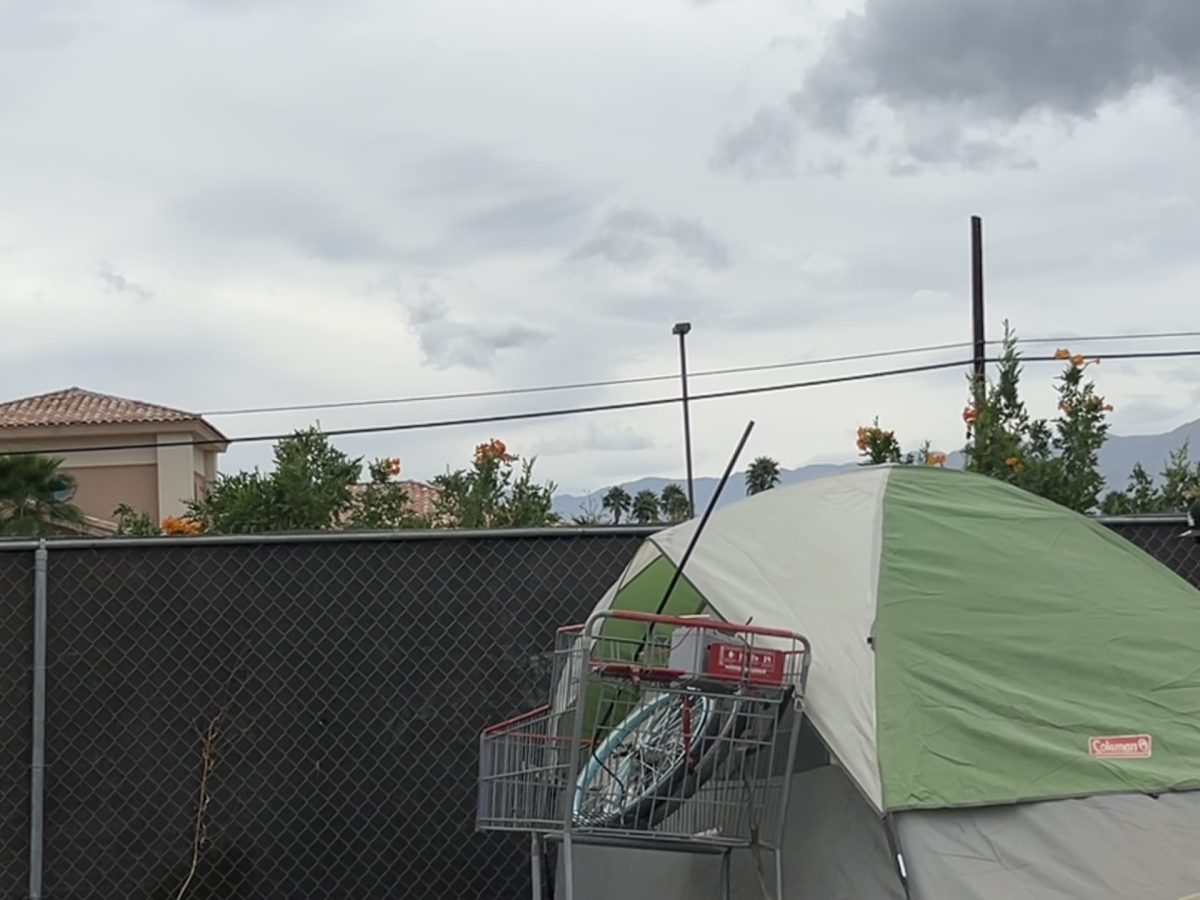
In February of this year, I personally witnessed an encampment sweep while on my way to class. I was able to experience firsthand the manner in which homeless people are othered and marginalized under the guise of kindness. What stood out to me the most about this experience was that everyone involved was extremely polite as they tore down a temporary shelter on a disused lot of land.
This shelter was out of sight from the main road, produced little trash, and had not impacted my regular commute for the past month it had existed. Regardless, it was deemed a blight that must be removed in the months leading up to festival season.
“It takes a special police officer to do this … we police with compassion,” said one police officer. The community’s reaction to their presence flies in the face of this sentiment regarding compassion and demonstrates the reality that the Indio police department’s Quality of Life Team exists to be the smiling face of depersonalization.
As the sweep was being conducted, people driving by started jeering at the homeless people and shouting praises for the police from their cars, some of them actively encouraging violence. “Let’s go coppers!” a group shouted enthusiastically, “Hands up! Hands up!” they chanted, laughing uproariously.
The entire function of the Indio PD’s Community Outreach program is to either connect people with shelter if they meet the myriad of requirements necessary after being fined for trespassing. When that fails, they shunt the ‘problem’ to another jurisdiction by offering one-way bus tickets out of town to homeless people. “[In] surviving, half of what I do is just moving my shit around, I don’t have a lot, but,” a homeless man shared on his experience with being displaced.
The disconnect necessary between one’s actions, their immediate harm, and the ad hoc justification for that harm is a conscious choice, as exemplified by a conversation I had with one of the public works employees who was helping to throw away the resulting materials from police officers dismantling someone’s sleeping place. “You just have to turn your heart off,” the worker told me, although his tentative tone left me unsure of who he was trying to convince, himself or me.
I asked him what exactly leads up to these kinds of enforcements, and he shared that it is usually prompted by local reports by either passersby or property owners of homeless people existing nearby. He then elaborated that they often make patrols around the area and photograph encampments in order to notify property owners so that they can then call them to perform a sweep.
The “before and after” pictures are especially important, as they create a false sense of progress, showing that the individual whose name happens to be attached to a disused parcel of land can ensure that no one makes use of it until it becomes profitable. The photos also act as justification for why the homeless people are homeless in the first place, characterizing them as vagrants and vagabonds who refuse to simply obey the law and die on the street.
“We did our part by helping them,” the public works employee expressed, waving away any future responsibility over the people they’ve forcibly relocated. “I get it, it’s easy a lot of times to just not have anyone tell them what to do,” he shares, although I am left wondering how any of us can truly understand the choice between abandoning a loved one or not receiving shelter, as can be the case for many couples who find themselves on the streets.
We need housing first solutions that don’t solely focus on providing affordable housing. Housing is a human right based solely on the fact that everyone recognizes its necessity for human life, and if we don’t have a right to live, what rights do we have at all? Homes are viewed in this country as a product to be invested in rather than a shelter, and profit is more important than human life.
Our attitude towards homeless people should cause us all to hang our heads in shame. We need to treat homeless folks as people with voices that matter. The number one thing I was repeatedly told in interviewing folks for this series was that nobody listens to the homeless and nobody cares what they have to say about their experiences. It’s more important than ever that we don’t turn our hearts off. The only long-term solution to homelessness is creating publicly funded permanent housing with no strings attached, something accomplished in many countries with significantly fewer resources than in the United States.
If you or someone you know is currently unhoused, College of the Desert provides many services, such as a food pantry available to all currently registered students, to help them meet their basic needs. A list of resources can be found here. Additionally, many other student services are available to enrolled students; a comprehensive list can be found here.