California’s AB 540 law continues to play a critical role in expanding access to higher education for undocumented students and other eligible residents by allowing them to pay in-state tuition at public colleges and universities across the state. The law applies to students attending California community colleges, the University of California system and the California State University system.
Under AB 540, eligible students are exempt from paying out-of-state tuition rates, significantly reducing financial barriers to higher education. Students who qualify under this law may also apply for state-based financial aid through the California Dream Act, which offers grants and other assistance to help cover tuition and educational expenses.
To be eligible for AB 540, students must meet specific requirements. These include attending a combination of California high schools, adult schools or community colleges for a total of three or more years, or earning the equivalent number of credits. Students must also graduate from a California high school or obtain a GED, high school proficiency certificate or equivalent credential. While the policy is widely associated with undocumented students, it also benefits other students who meet the residency and attendance criteria.
Supporters of AB 540 argue that the law promotes educational equity by recognizing the contributions and long-term residency of students who have grown up and been educated in California. Advocates say it strengthens the state’s workforce by enabling more students to earn college degrees and contribute to the economy.
As the cost of higher education continues to rise, AB 540 remains a cornerstone of California’s efforts to ensure that college access is based on opportunity and achievement rather than immigration status alone.
While the law allows eligible students to pay in-state tuition, it is being challenged at the federal level. The Trump administration filed a lawsuit against California in November 2025, challenging AB 540 and the California Dream Act for providing in-state tuition and financial aid to eligible undocumented students.
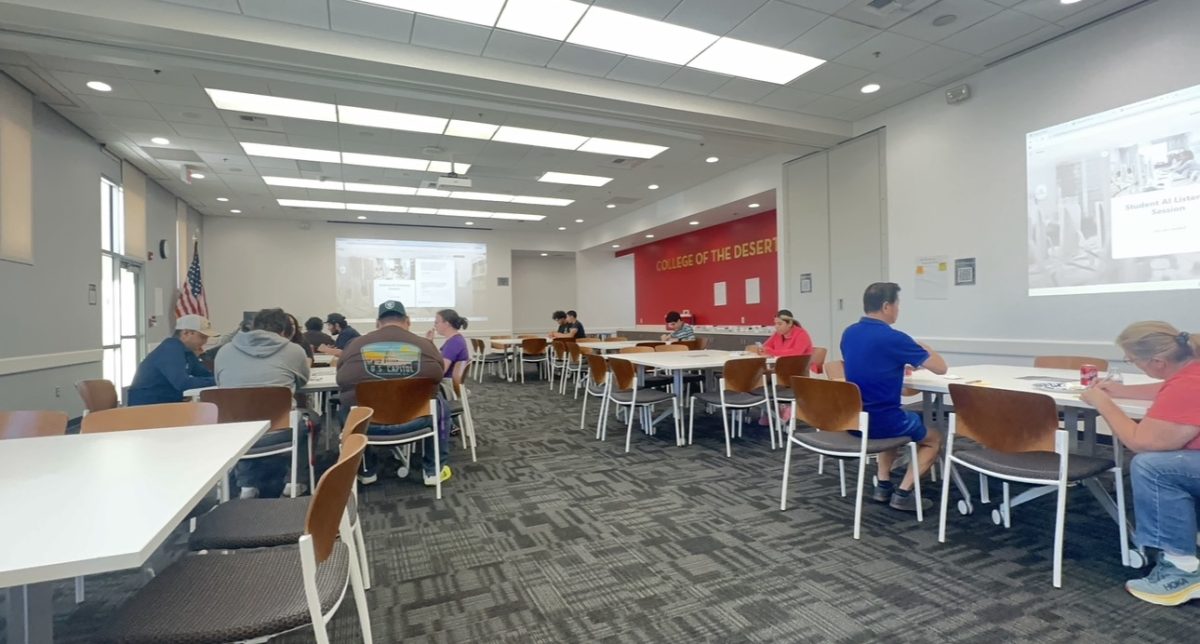
For students who rely on AB 540, the law represents more than a tuition benefit; it is a pathway to stability, education and community. From a student perspective, attempts to challenge or weaken AB 540 seem unnecessary and concerning. Roberto Ramos, vice president of ASCOD (Associated Students of College of the Desert), who is active in campus advocacy, questioned the motivation behind renewed scrutiny of the law. “If the Assembly bill already exists, it makes you wonder what they’re really trying to fix,” he said. “To us, it feels less like improvement and more like taking away something already established.”
At College of the Desert, administrators have publicly affirmed their commitment to student safety, while federal privacy protections such as FERPA help ensure student information remains confidential. Additional policies and campuswide support efforts have helped students feel less isolated. As discussions around AB 540 continue, students and advocates argue that the law remains a crucial pathway to higher education, ensuring that opportunity in California is shaped by commitment and achievement, not immigration status.
With ongoing confusion and developments within the government — and continued uncertainty about the future — College of the Desert remains vocal in its support of its undocumented population, aided by the Dreamers Resource Center and its staff.
“Knowing that faculty and staff are willing to stand up for us makes a huge difference. It reminds us that we belong here,” Roberto said.
At this time, nothing has changed: in-state tuition rates and access to state financial aid for students eligible under AB 540 remain the same. California’s public colleges and universities continue to honor the law, allowing qualifying students to pay in-state tuition and apply for aid through the California Dream Act.