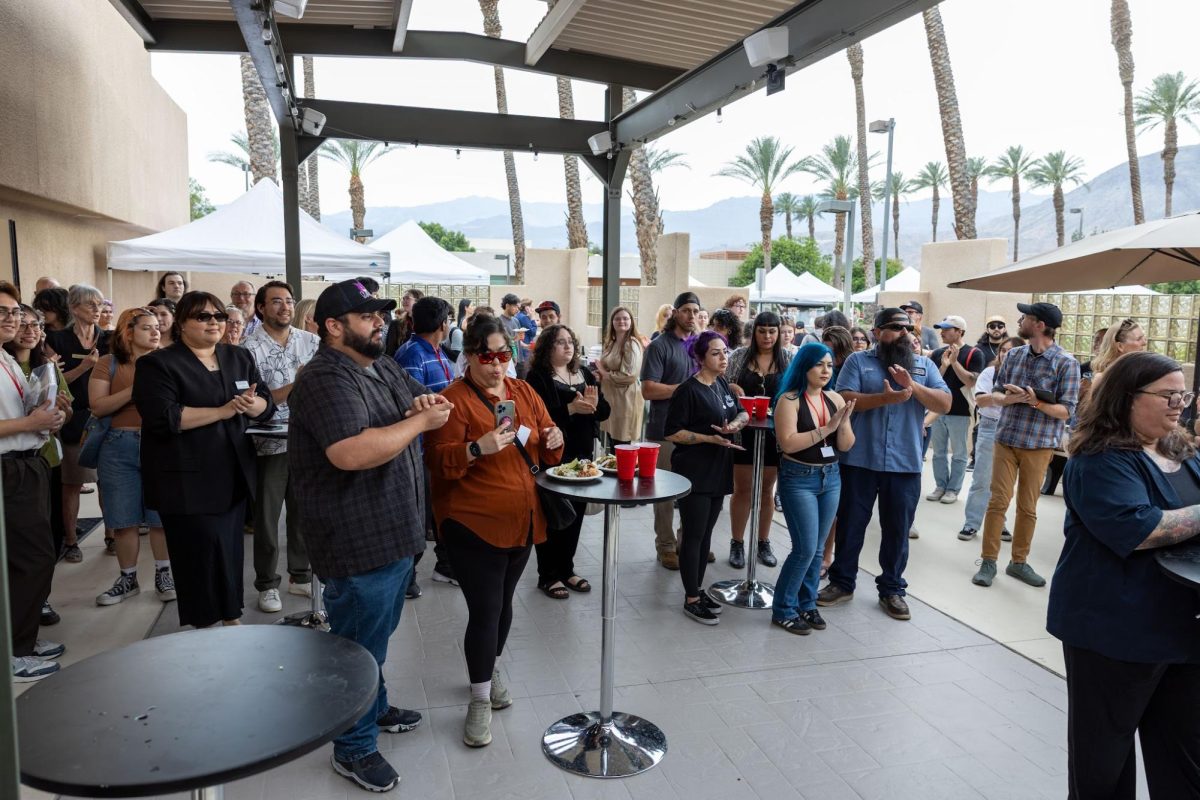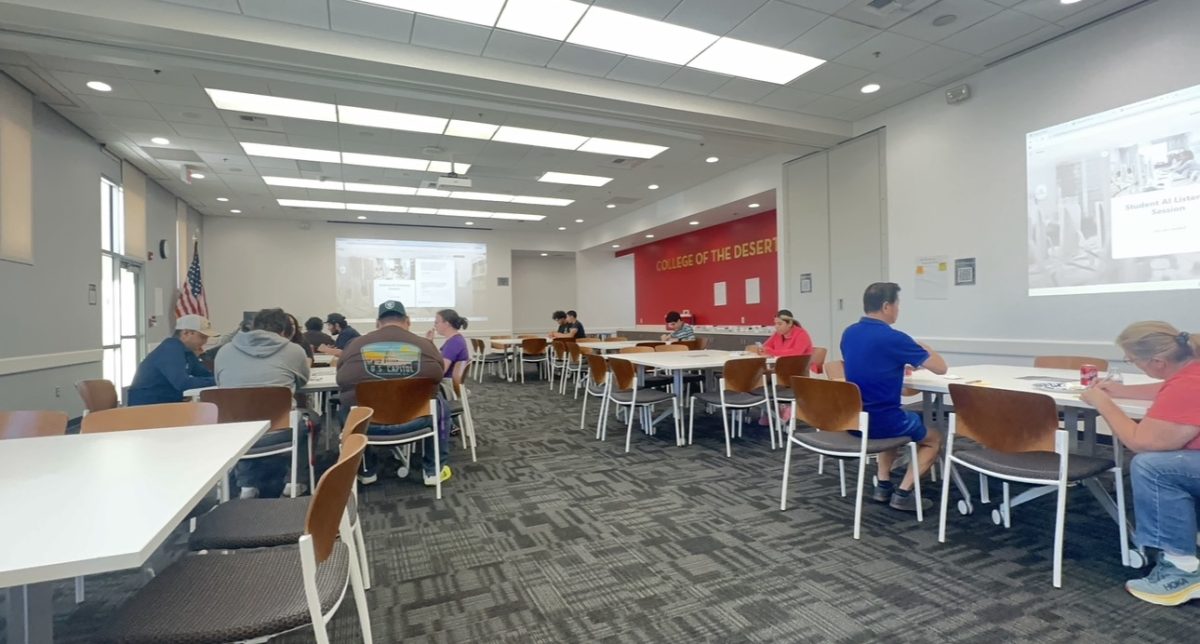
Is the future of AI in the classroom essential, or could it be detrimental? Students at College of the Desert voiced their opinions during a listening session on March 11.
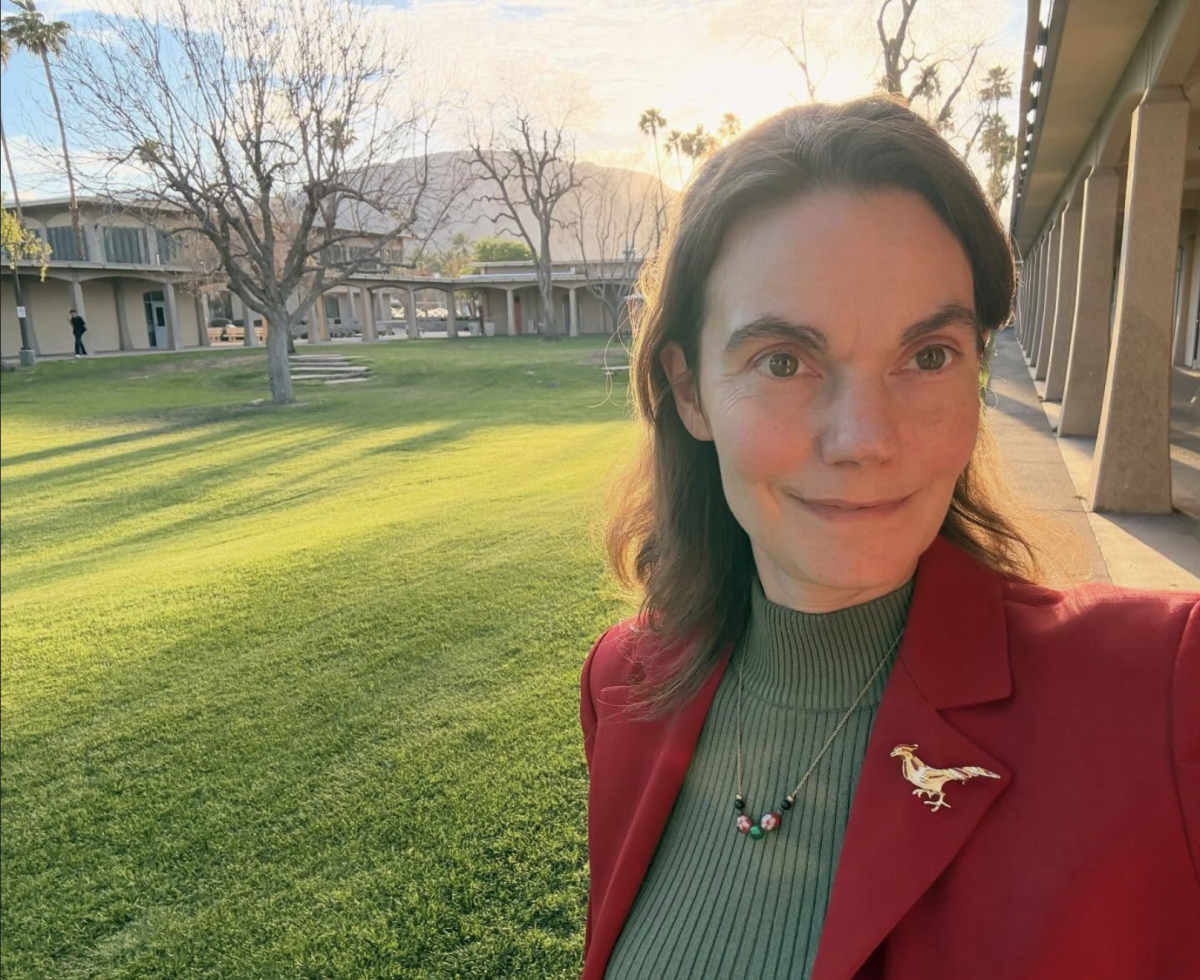
The session was hosted by Donna Greene and Hael Kobayashi, leaders in AI integration at the college. Their goals were to respond to student concerns about AI and explore how it can be ethically integrated while supporting sustainability.
Students were asked two open-ended questions: “When you hear the term AI in the classroom, what do you feel and think?” and “What does responsible AI use look like?” They could submit responses by scanning a QR code.
The room buzzed with mixed feelings, until a student, Brianna Mitchell, took the stage. Silence fell immediately.
Mitchell, 22, is a biochemistry major at College of the Desert who is pursuing a focus in environmental science. She has strong opinions about AI and spoke up during the session.
She cited research she had conducted on AI, noting that 160 new AI-related data centers have been built in the past three years (Forbes, 2026). Mitchell also highlighted the water crisis affecting communities located near these data centers.
Mitchell ended her speech by saying, “I am ashamed of you. If you cared about our futures, then you would end this meeting and research ways to undo your damage, like switching banks and search engines to ones like Ecosia that plant trees.” Her words left a noticeable impact on the audience.
She said she believes AI should not be allowed in classrooms under any circumstances. “The world will suffer. What I’m going to try to do is talk to the college and make it so that teachers have to mark zero on students’ assignments when there is use of AI. Because they can, but they’re not really required to. That’s just one simple step that I can take, one we can take for this school,” she said.
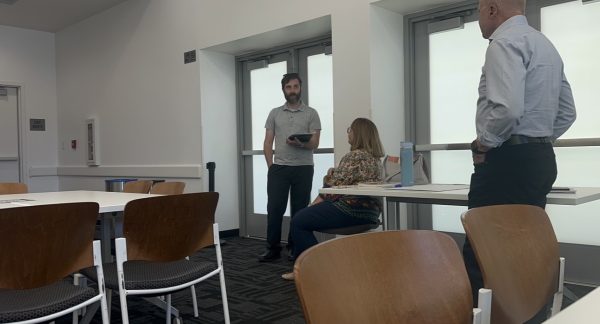
Other students were also given a chance to share their opinions. Sticky notes and pens were passed around so each student could write a comment and place it on a discussion wall. More than half of the notes supported AI use, with highlighted topics including responsible use and the ethical implications of AI.
AI has even reached classrooms in certified trade programs. Students Sergio Nevarez and Julian Zamarripa spoke on the matter.
Nevarez is currently pursuing a bachelor’s degree in automotive science. He said AI use in the classroom has harmed the learning process for younger students.
“They just have ChatGPT do their homework for them. Then they come into class and they don’t know anything. Now, if they’re in our group, we have to dumb it down and go back to square one. We could have been rocking and rolling, already done. But these kids don’t read the books, and they don’t study them,” Nevarez said.
Zamarripa is majoring in automotive technology. He highlighted the difference AI makes in a skilled trade and said professors are now also relying on AI to assist students.
“There’s a difference between doing an assignment online or on paper, then actually doing it with your hands. Because when you read it, you’re like, ‘OK, can I get an understanding?’ But when you see the thing in front of you, you’re like, ‘What am I looking at?’ That’s me every day. I’m relying more on you guys [classmates] to help me because the teachers, they’re just walking about or they’re gone,” Zamarripa said.
There is no doubt that AI is rapidly expanding, and its use in the classroom is growing. College of the Desert aims to help students and faculty transition to AI in a way that is smooth, fair, and ethical. That is why Greene Kobayashi continue to hold these listening sessions.
Donna Greene, one of the organizers of the event, said the listening session went very well.
“We found that students are cautiously optimistic about AI tools and their use in their coursework and future careers,” Greene said in a statement. “They worry about the loss of critical-thinking skills and about the environmental and ethical concerns surrounding the use of these tools. They do like tools for streamlining and simplifying tasks, such as creating study guides and checking spelling and grammar.
“In addition, we held several other sessions with students throughout campus and with faculty, leadership and classified staff,” Greene said. “We are working on plans for the future that will encompass the entire campus community. We believe that while there are important concerns regarding the use of these tools, much like the internet, they are here to stay. We would be doing a disservice to our students, staff and community to ignore these changes and fail to create a plan to meet the new challenges and opportunities presented by AI.”
It remains to be seen where the campus will be five years from now. Will students use their voices to resist AI or embrace it?