This is part two of a series on homelessness in the Coachella Valley. Links to the other parts of the series are provided below.
“Poverty is expensive.” This seemingly paradoxical phrase is a common refrain among activists and speaks to the challenges facing the Coachella Valley and the rest of the United States.
It is widely understood that below a certain income threshold, basic living expenses often create additional financial burdens without providing enough stability for individuals to escape poverty. This phenomenon is commonly referred to as the “poverty trap.”
For many homeless individuals, the three most essential expenses are food, transportation and health care.
About one in eight U.S. residents require supplemental assistance to afford food, according to the U.S. Department of Agriculture.
Many of those individuals are not currently homeless, but changes to the Supplemental Nutrition Assistance Program known as SNAP benefit requirements could force some to choose between paying for food or housing. Beginning May 1, some recipients who are unable to meet the 80-hour-per-month work requirement may lose benefits, placing additional strain on already overburdened food banks.
Grocery prices are also expected to rise in the coming months. According to a survey by the American Farm Bureau Federation, many farmers are struggling to afford fertilizer needed to meet demand. Analysts have also pointed to global supply chain concerns connected to instability in the Middle East. According to the United Nations Conference on Trade and Development, a significant portion of global fertilizer shipments pass through the Strait of Hormuz.
For those living in subsidized housing, including Section 8 housing, financial margins are already extremely thin, and many residents may struggle to absorb additional increases in living costs.
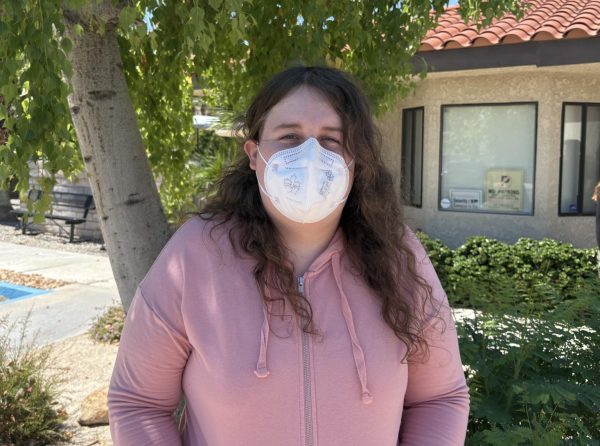
One homeless individual told The Chaparral that staying at a women’s shelter costs “at least $900 a month.”
“I pay that much, and it only leaves me with a few hundred dollars extra every month,” the individual said.
The USDA Food and Nutrition Service estimates that feeding one adult male under its most conservative “Thrifty Food Plan” cost about $312.30 per month as of March 2026. For many individuals facing homelessness, those expenses leave little room for emergency costs such as health care.
Transportation expenses add to nearly every other essential activity. Individuals fortunate enough to secure a spot in a shelter after being placed on a waitlist are often required to attend job interviews across the Coachella Valley and return before curfew in order to maintain housing.
That can be difficult as gas prices rise and public transportation remains inconsistent in some areas.
Reliable transportation is also critical for attending medical appointments on time, especially when receiving care may require multiple appointments and referrals.
Under California law, health care providers are generally required to provide nonurgent appointments within 10 business days. However, wait times are often longer, and those protections may not apply to individuals without health insurance.
“I got medical attention, but I had no insurance. I’m just stressed. Stress kills me.”
According to the California Health and Human Services Agency, more than 348,000 homeless individuals were discharged from medical facilities against medical advice between 2019 and 2023.
Homeless individuals also face a mortality rate 3.5 times higher than people with stable housing, according to the National Bureau of Economic Research.
The unhoused population is often exposed to environmental hazards such as pesticides and herbicides. As one College of the Desert student explained, “You’d have a homeless teen in the field, and they’re rolling around in pesticides.”
At the same time, the Supreme Court of the United States is preparing to hear arguments related to claims about the carcinogenic effects of glyphosate, the primary ingredient in Roundup. An investigation by Mother Jones reported that 270,000 pounds of glyphosate were sprayed in California forests in 2023 alone.
Part three of this series will examine the unique environmental conditions and hazards facing the Coachella Valley through personal interviews and firsthand accounts.