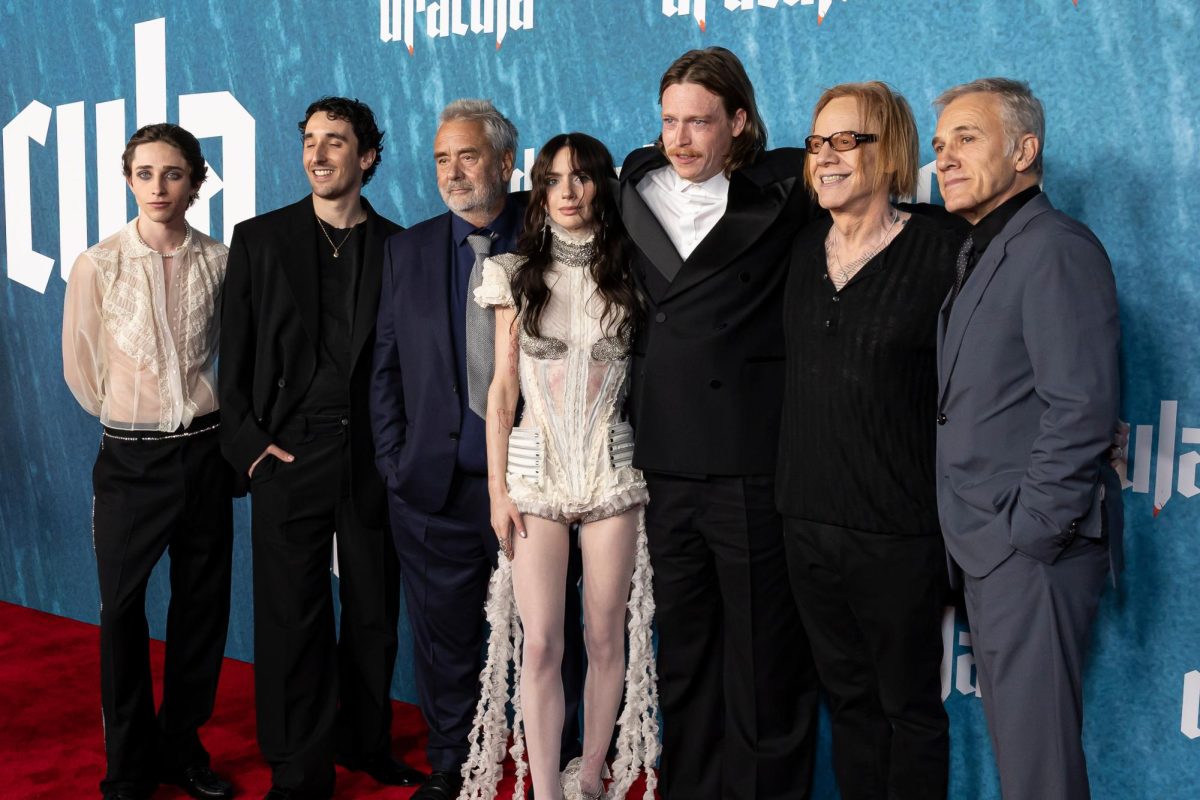
A centuries-old legend has returned to the big screen with a fresh and ambitious vision. The latest adaptation of “Dracula,” originally written by Bram Stoker in 1897, has been revamped in a 2025 film directed by Luc Besson and released widely in the United States in 2026. Rather than focusing purely on horror, this version blends gothic romance, historical drama, and psychological conflict, marking a noticeable shift in how the iconic vampire is portrayed.
The film centers on Prince Vladimir, a grieving nobleman whose life is shattered by his wife’s death. In a moment of despair and defiance, he renounces his faith and embraces immortality, becoming the vampire known as Dracula. This origin story puts emotional trauma at the center, giving audiences a more relatable and human side to a character who’s usually portrayed as purely monstrous.
Caleb Landry Jones takes on the lead role, delivering a performance that emphasizes vulnerability in his performances. Opposite him, Christoph Waltz portrays a priest whose mission is to confront and ultimately destroy Dracula, adding a layer of moral tension to the story. Meanwhile, Zoë Bleu appears as Mina, Dracula’s wife and a figure who becomes central to Dracula’s emotional journey and obsession.
The film has drawn attention for its striking visual style. Shot across elaborate gothic sets and dramatic landscapes, the production leans heavily into atmosphere. From candlelit castles to shadow-filled forests, the imagery reinforces the film’s themes of isolation, obsession, and eternal longing.
Costume design and cinematography have also played a major role in shaping the film’s identity. Flowing cloaks, detailed period attire, and carefully composed lighting create a stylized aesthetic that feels both classic and modern.
Unlike many previous adaptations, this film moves away from pure horror elements such as jump scares and focuses instead on emotional storytelling. By portraying Dracula as more of a tragic character than a simple villain, the movie fits into a broader trend in films that try to see classic antagonists in a more understanding, sympathetic way.
This shift reflects changing audience expectations. Modern viewers often seek complex characters and layered narratives, even in genres traditionally driven by fear or suspense. The 2025 “Dracula” attempts to meet that demand by blending romance and tragedy with supernatural elements.
Since its 2026 release, the film has sparked conversation among critics and audiences. While some reviewers have questioned its pacing and tonal shifts, others have praised its ambition and visual storytelling. Audience reactions have generally been more favorable, particularly among viewers drawn to character-driven narratives and gothic aesthetics.
The film’s release also highlights the enduring relevance of “Dracula.” More than a century after its publication, the story continues to evolve, reflecting contemporary themes while maintaining its original core of love, loss, and immortality.
Whether seen as a bold re-adaptation, the film reinforces the idea that “Dracula” remains one of the most adaptable and enduring figures in popular culture and gothic aesthetics.