This past month, I spent my time playing a long-beloved strategy title known as Final Fantasy Tactics. Originally launching in June of 1997, my father, seeing the launch and promotional material for the popular Final Fantasy VII, grabbed the title off the store shelf. Unbeknownst to him, the title was a complex, non-entry-level style of a type of game. We’d spend a considerable time with the given menus and prompts, being a child, and my father, a non-gamer, in complete confusion. Over the years, I’d heard of the title’s legacy and return on the PlayStation Portable and iOS devices in 2007 and 2011, respectively. Now, with the release of Final Fantasy Tactics: The Ivalice Chronicles on modern platforms, I could finally dive in headfirst.
Final Fantasy Tactics is set in a medieval time period in the feudal kingdom of Ivalice. All of this is set within the backdrop and conflict known as The War of the Lions. Players assume the role of Ramza Beoulve, the youngest son of a powerful noble family whose goal is to serve his homeland, but this eventually leads to him discovering corruption within his own family and primarily the upper class. The game incorporates supernatural elements not just in gameplay but with late reveals revolving around the source of the conflict.
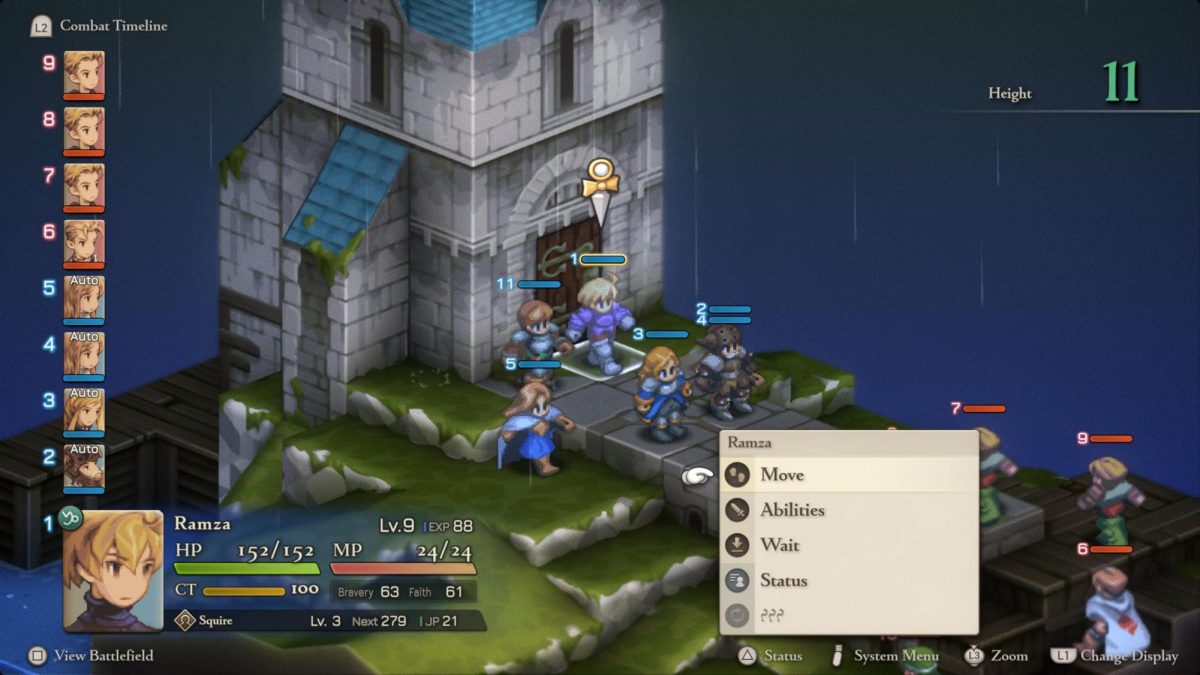
Final Fantasy Tactics: The Ivalice Chronicles features a battle system built around planning and strategy. Battles take place on isometric, grid-based maps where movement, attacks, and abilities all take place on tiles. Units act when their Charge Time meter fills, which is determined by their Speed stat, so faster units get more turns. Elevation, terrain, and unit facing all affect combat. Attacking from higher ground or behind an enemy gives an advantage, while poor positioning can put a unit at a disadvantage. Each unit has a class, or job, with abilities, and earning Job Points in battle unlocks more skills. You can switch jobs and combine learned abilities to create hybrid units, giving players flexibility in the teams they can create. To keep things interesting, extra measurements of your units, known as Bravery and Faith, influence physical and magical damage. Some battles also have specific objectives, like protecting a unit or surviving a set number of turns, which requires adjusting tactics. Overall, success depends on careful positioning, timing, and ability management rather than just having high-level units.
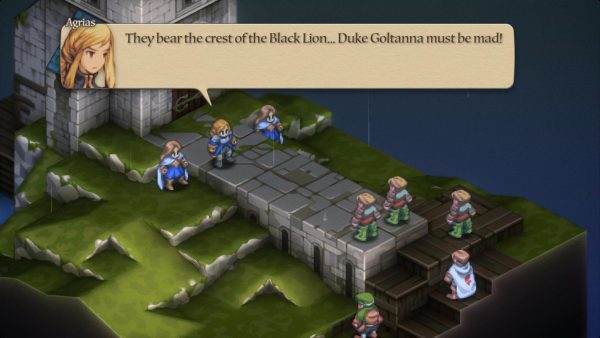
Ultimately, I’d like to say that Final Fantasy Tactics: The Ivalice Chronicles holds up well, providing a substantial challenge for those looking to engage its deeper strategic elements. Some of the stronger additions to this update include fully voiced performances that add a rich depth to this tale. Some players may find the complexity of the mechanics off-putting, and the title does feature several significant difficulty spikes, primarily designed to test the player’s full grasp of the system. For fans of Final Fantasy or Tactics-based titles, I can confidently provide a solid recommendation for this title.