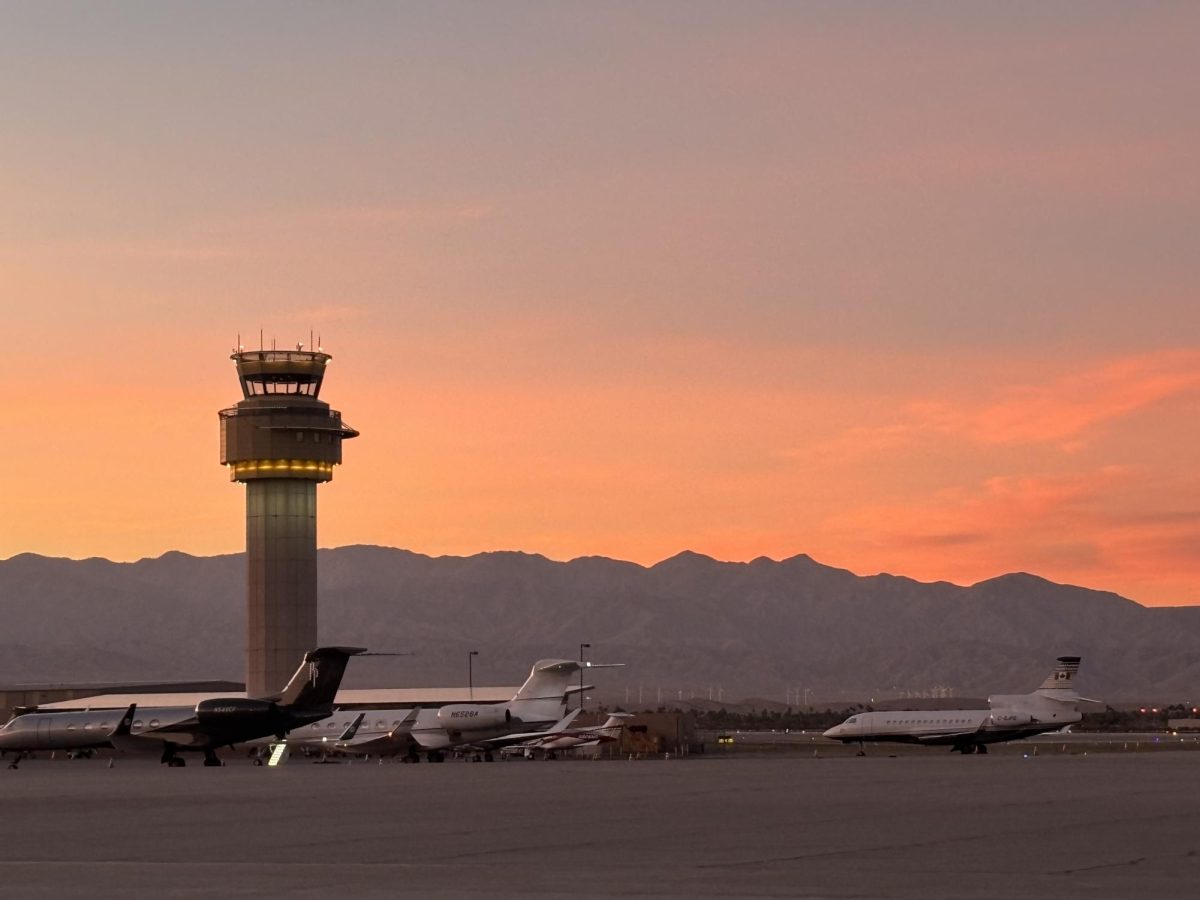
Many steps take place at an airport to ensure operations run smoothly, safely and on time. From checking luggage to going through TSA and boarding the plane, multiple jobs work together to maintain an efficient process for passengers.
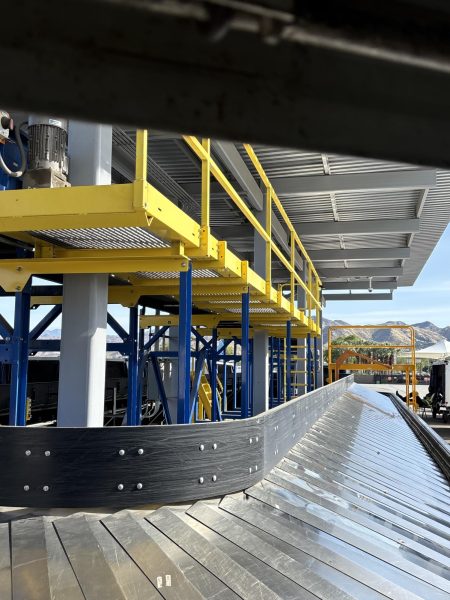
Before luggage reaches the plane, it is screened by the Transportation Security Administration, scanned and verified. Once verified, it is placed onto the baggage belt. There are five baggage belt lines, depending on the airline. The luggage is then loaded onto a cart and transported to the plane by a bag room agent.
If an issue occurs due to the airline or ground crew, passengers may receive a voucher if their luggage is delayed.
Ramp agents perform several critical jobs to ensure safe and efficient flight departures and arrivals. To conserve fuel and battery power, aircraft can shut down internal systems while parked, as ramp agents connect them to ground power.
Agents who are marshal-certified take on the responsibility of guiding aircraft into position. A marshaller directs the plane using illuminated wands, and pilots follow those signals to park safely.
Ramp agents face both avoidable and unavoidable challenges on the job. One avoidable issue is a lavatory spill.
Ramp agents are responsible for servicing the aircraft’s lavatory system, which includes removing waste from the sewage tank. They use a specialized cart connected by a hose to collect the waste. If the hose is not secured properly, a spill can occur, releasing sewage onto the tarmac.
In those situations, the airline must notify airport personnel, who respond with a spill kit. The kit, often referred to as “kitty litter,” is a gravel-like material used to absorb liquids such as hydraulic fluid, oil, antifreeze, lavatory waste and gasoline.
An example of an unavoidable issue is when an aircraft operates under Minimum Equipment List guidelines, commonly referred to as MEL. The list outlines which equipment may be inoperative while still allowing the aircraft to fly safely.
Robert Morales, a ramp supervisor at Palm Springs International Airport, explained how the process works.
“The captain informed me the aircraft would be flying MEL,” Morales said. “That means the crew runs through a checklist to ensure minimum safety standards are met. As long as critical systems are operational, the aircraft can still fly safely.”
Morales described a situation in which an aircraft arrived with a failed battery system.
“The aircraft came in with its battery system down, which controls engine startup,” Morales said. “Instead of replacing the system, we performed an air start.”
An air start uses a ground power unit to deliver compressed air into the engine, allowing it to begin spinning. Once the engine reaches sufficient speed, it can continue operating independently, and the equipment is disconnected.
Aircraft travel involves more than what passengers see. These critical operations often go unnoticed because they are performed efficiently. The process requires significant behind-the-scenes coordination and technical expertise.